Japan's E-Bike Race: USD 2.9B Pedelec Surge on 65-Plus Demand | Ken Research
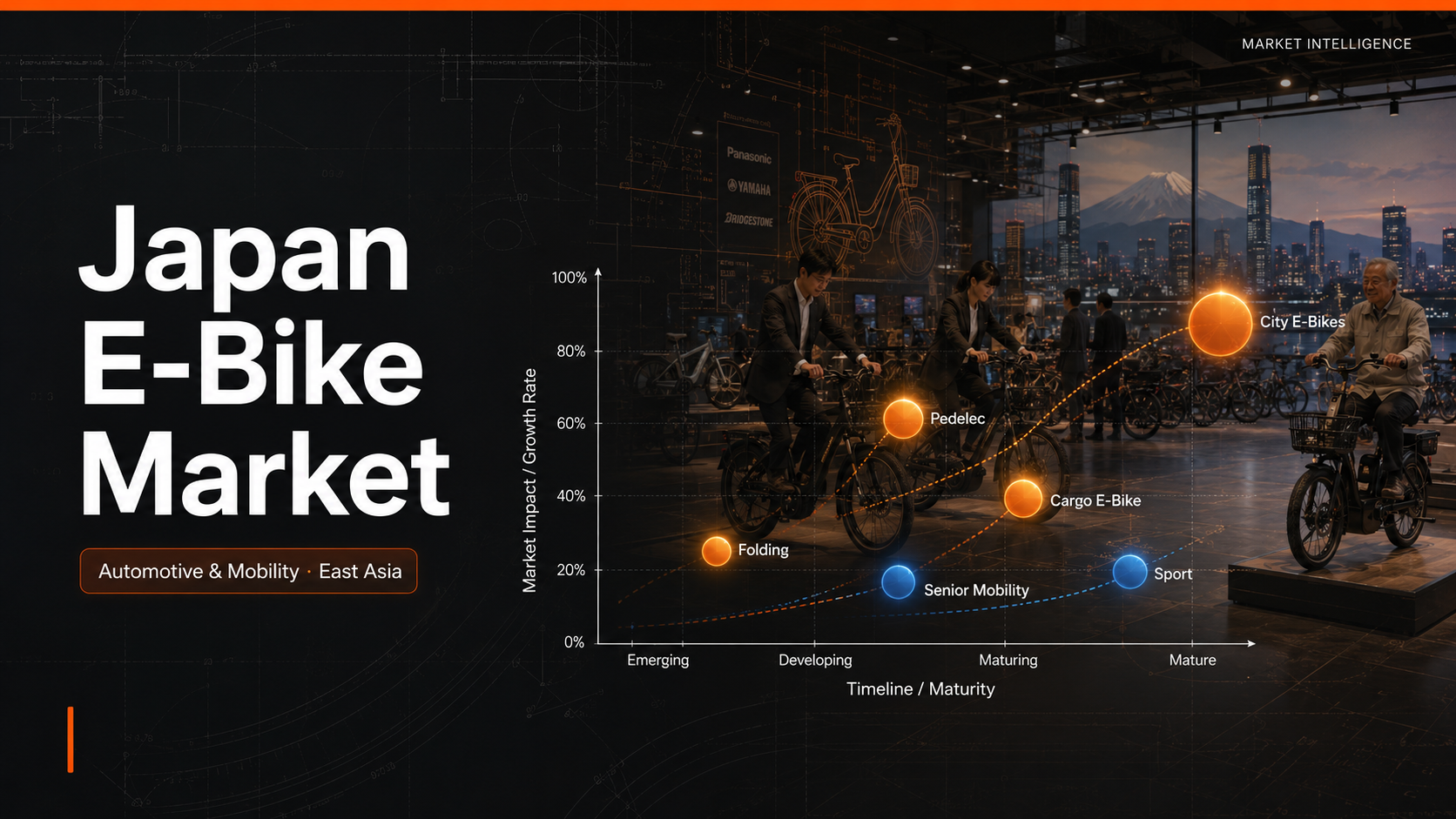
Japan E-Bike Market Surges to USD 2.9B on Aging Commuter Demand | Ken Research
The biggest growth in Japan's e-bike market is not coming from young urban commuters. It is coming from a 65-plus demographic that now drives premium pedelec demand for daily mobility and active aging. As per Ken Research market modelling, the Japan E-Bike Market is valued at USD 2.9 billion in 2024, with the pedelec segment commanding around 85% share. The complete brand, price-tier, and Kanto-Kansai split is in the Japan E-Bike Market Report.
This analysis draws on data from Ken Research market modelling, METI Mobility Digital Transformation strategy disclosures, MLIT cycling infrastructure data, and independent e-mobility benchmarking.
USD 2.9 Billion Market: Pedelec at 85% Share, Aging Commuters as Anchor
The demand base is structurally tied to Japan's demographic shift. As tracked by Ken Research modelling, with 30% of adults over 65 in 2022 and urban population approaching 92%, e-bike commuting is moving from niche to default for elderly riders and short-trip urban professionals. Tokyo, Osaka, and Yokohama anchor demand, with the Kanto region absorbing the largest commuter share. For investors mapping adjacent EV ecosystem build-out, the Vietnam EV Charging Infrastructure Market shows the same urban electrification thesis at an earlier maturity stage.
- Pedelec dominance: 85% market share for pedal-assist bikes, classified as regular bicycles under Japanese traffic law, removing licensing friction.
- Senior mobility: Trekking and city e-bikes capture aging riders into their seventies and eighties, the fastest-growing user cohort.
- Urban commute: Electric city bikes account for around 78% market share in 2024, anchored by Tokyo's Kanto commuter belt.
Panasonic, Yamaha and Bridgestone Cycle Hold the Premium Pedelec Stack
The competitive map is dominated by domestic brands with deep retail and dealer networks. As estimated by Ken Research, Panasonic Cycle Technology, Yamaha Motor, Bridgestone Cycle, Shimano, and Asahi Cycle together anchor the premium and mid-range stack, with Trek and Giant Manufacturing serving import-led sport segments. METI's Mobility Digital Transformation Strategy May 2024 frames e-mobility as a core pillar of Japan's transport reset, per the METI Mobility DX Strategy document. The price ladder splits cleanly: budget under JPY 70,000, mid JPY 70,000 to 150,000, premium above JPY 150,000.
- Domestic premium: Panasonic and Yamaha hold the largest share in premium pedelec above JPY 150,000, anchored by senior and commuter buyers.
- Battery and drive: Shimano supplies drive systems across Tier-1 OEMs, with battery innovation tied to lithium ion advances.
Need the Tokyo-Osaka-Yokohama demand map plus Panasonic, Yamaha, and Bridgestone brand share split? Download Sample Report for price-tier breakdown and Kanto commuter-belt forecast.
Why Is Japan's JPY 20 Billion Eco-Transport Subsidy Reshaping E-Bike Demand by 2030?
The government has allocated approximately JPY 20 billion (around USD 180 million) for eco-friendly transport subsidies, with e-bikes named as a priority modal shift. According to Ken Research analysis, with fuel prices averaging JPY 170 per liter, the cost economics now favor pedelec commuting over short-distance car or scooter use. MLIT's cycling infrastructure rollout in Tokyo and Osaka adds dedicated bike lanes and parking, lowering urban adoption friction. The combined effect is a structural pull on premium pedelec volume through 2030.
Japan E-Bike Outlook to 2030: USD 2.9B Base, Senior Mobility Wave, and Carbon-Neutral Tailwind
Three drivers anchor the forward view. Per Ken Research modelling, the senior mobility segment and the Kanto commuter wave compound on a Japan-wide push toward net zero. The pedelec category will continue to dominate at 85% through the decade, with cargo and folding formats emerging in dense urban cores. For investors tracking the battery side of the e-mobility stack, the Turkey EV Battery Gigafactories Market highlights the lithium-ion capacity build-out powering pedelec drive systems globally.
- Aging anchor: The 65-plus cohort at 30% of adults creates durable demand for senior-friendly pedelec and trekking formats.
- Subsidy lift: The JPY 20 billion eco-transport subsidy lowers effective purchase price for buyers in the mid-tier band.
- Carbon-neutral: Japan's net zero pathway lifts pedelec category share through urban modal shift policy.
What OEMs, Retailers, and Investors Must Do Before the Senior Mobility Window Compounds
The combined effect of METI's Mobility DX strategy, MLIT cycling infrastructure, and the JPY 20 billion subsidy creates a multi-year design and distribution opportunity. OEMs, retailers, and capital allocators must move before Panasonic and Yamaha consolidate the premium stack further.
- OEMs: Lock senior-friendly pedelec design with low step-through frames to capture the 65-plus cohort growth.
- Retailers: Build Tokyo and Osaka flagship test-ride networks before subsidy demand peaks in 2026 to 2027.
- Investors: Track battery and drive-system suppliers benefiting from the 85% pedelec share demand structure.
Building a Japan e-bike distribution or senior mobility play? Access the Japan E-Bike Market Report for brand share, price-tier, and city-level demand forecasts.
Conclusion
Japan's e-bike market has entered a demographically driven inflection where pedelec dominance, senior mobility, and carbon-neutral policy converge. The brands that own the senior-friendly premium stack ahead of the 2030 subsidy wind-down will compound margin, not chase it. For OEMs and investors, the strategic question is no longer whether pedelec wins, it is who owns the 65-plus buyer first. Access the Japan E-Bike Market Report for the full landscape.
Frequently Asked Questions
Q1: What is the size of the Japan E-Bike Market?
The Japan E-Bike Market is estimated at USD 2.9 billion in 2024 per Ken Research market modelling, with the pedelec category commanding around 85% market share across Tokyo, Osaka, and Yokohama.
Q2: Who are the key players in Japan's e-bike market?
Leading brands include Panasonic Cycle Technology, Yamaha Motor, Bridgestone Cycle, Shimano, and Asahi Cycle, with Trek and Giant serving import segments. For urban mobility parallels see the Nigeria Urban Mobility Ride-Hailing Market.
Q3: Which segment leads Japan's e-bike demand?
Pedelec pedal-assist leads at around 85% share per Ken Research estimates, with electric city bikes capturing roughly 78% market share driven by Tokyo's Kanto commuter belt and senior riders.
Q4: What is driving growth in Japan's e-bike market?
Growth drivers include Japan's 30% of adults over 65, the JPY 20 billion eco-transport subsidy, fuel prices averaging JPY 170 per liter, and METI's Mobility DX strategy supporting modal shift.
Q5: How does Japan's aging population affect e-bike demand?
With 30% of adults over 65, demand has shifted toward senior-friendly pedelec and trekking formats priced in the JPY 70,000 to 150,000 mid-tier band, anchoring active aging mobility.
For the full competitive benchmarking, price-tier forecasts, and Tokyo-Osaka-Yokohama hub breakdown, access the Japan E-Bike Market Report from Ken Research, a leading market intelligence firm covering automotive and mobility across Asia Pacific.


Comments
Post a Comment